
Having gained so much ourselves from subsidised University of Oxford educations, we strongly feel we should help students from Cornwall, who now have to be self-funding. The bursary scheme we run offers bursaries from £350 – £600 for students for projects to be performed before September 2026. Normally only one award will be given to each student during their student career. These are available to all Cornish undergraduate and postgraduate students.
Bursary to promote the understanding of Cornwall and Cornish Culture and Heritage
Cornwall has a rich culture, heritage and environment, both past and present. This bursary is to promote the academic understanding of Cornish culture in its widest sense and to foster future academic interest and awareness of Cornwall. It is hoped in the long term that inspiring future academics and graduates with an interest in Cornwall will result in them contributing to Cornwall.
This bursary (value £350-£600) is to finance an Oxford student to undertake a project in Cornwall that will contribute to their fieldwork or dissertation. Subjects might include archaeology, anthropology, history, language, literature, music, art, geology, science, the environment and economics but this list is not exclusive and we are open to other topics. This bursary is open to all undergraduate and post graduate students.
Closing date 15th April 2026
Bursaries to fund a broader understanding of the student’s subject
Bursaries (value £350 – £600) to fund students with strong connections to Cornwall (in most cases 5 years residence in Cornwall) to travel or visit somewhere that will contribute to a broader understanding or different viewpoint of their subject. Normally only one award will be given to each student during their student career.
Closing date 15th April 2026
The Endellion Sharpe Bursary to fund an activity beneficial to themselves and others
Bursaries (£350 – £600) to fund students with strong connections to Cornwall (in most cases 5 years residence in Cornwall) to travel to perform a project, which will be a life-enhancing activity that will benefit both the individual and the local community and broaden the mind of the applicant.
Normally only one award will be given to each student during their student career.
Closing date 15th April 2026
Bursaries to fund an Internship
A maximum of two bursaries (£350 -£600) to contribute towards internships for undergraduate students with strong connections to Cornwall (in most cases 5 years residence in Cornwall). Normally only one award will be given to each student during their student career.
Closing date 15th April 2026
Bursary to fund a medical elective abroad
Bursary (value £350- £600) to fund a medical student with strong connections to Cornwall (in most cases 5 years residence in Cornwall) to work in a hospital or visit somewhere that will contribute to a broader understanding or viewpoint of clinical medicine. Normally only awarded in the final year of clinical training.
Closing date 10th January 2026
Format for Applications for Bursaries
The committee considering applications will give awards according to how closely they meet the conditions of the bursaries. Applicants should aim to present their case clearly and grammatically, paying attention to syntax and spelling. Please read through your application carefully before submission. That is a good habit to form, which will be valued in your professional careers.
Please send :- CV with personal statement and Cornwall connections – 1 page and an Outline of Internship or Bursary project – 1 page
to:- Professor Fenella Wojnarowska
01566 781319
fenella@northtregeare.com
.
REPORT ON UNIVERSITY OF OXFORD ALUMNI CORNWALL BRANCH BURSARIES 2024
We awarded the following bursaries in 2024:
Bursary to fund a broader understanding of the student’s subject 4 awarded (1 postponed until 2025)
Bursary to promote the understanding of Cornwall and Cornish Culture and Heritage 1 awarded
Bursary to fund an Internship 2 awarded
Bursary to fund a Medical Elective Abroad 2 awarded
Bursaries to fund a broader understanding of the student’s subject.
Elizabeth Glanville is studying at Earth Sciences at St Anne’s. Her project was an Independent Mapping Project in Castellane, France.
For 6 weeks I worked on collecting data from across an area of 12km2 near Castellane, in the Alpes-de-Haute-Provence department of France for my undergraduate geological mapping project. While walking the paths of my mapping area, I traced out the variations in bedrock, both lithologically and structurally, which record the conditions in which these sediments were deposited over 100 million years ago and the deformation they have witnessed since. This region forms part of the Alpine orogenic belt, with these mountains brought to outcrop over 1000m above sea level due to the tectonic forces of the collision of Africa with Eurasia, and the continual weathering controlled by surface conditions. Following the fieldwork stage, which was kindly supported by the Cornwall Alumni Society, I am compiling the data and samples, and consulting the existing literature on the region’s geology. This will enable me to produce a 1:10000 scale geological map with structural cross-sections and a stratigraphic column to further detail the inferred relationships of bedrock units in the subsurface and up to 1km above and below the present-day topography.
Lizzie is from Falmouth.
Hollie Noble is a third year student reading English Language and Literature at Jesus College for BA. Her project was studying ‘Medieval and Modern Contemplatives; an Investigation into Monastic Life’.
I had a wonderful time at Quarr Abbey on the Isle of Wight, where I got to witness and take part in the contemplative, monastic lifestyle which has been practiced there for hundreds of years. Having specialised in medieval literature for my degree, most of which was produced in a similar monastic setting. I wanted to understand a bit more of what monastic life comprised. Through conversation with the monks, and through taking part in some of their daily services, I gained valuable insight into the key practices of prayer, work and study that have been preserved from the medieval roots of the Benedictine order. I was also able to visit the ruins of the medieval abbey, founded in 1132, which gave further insight into what medieval monastic life looked like, and how it has changed since. Overall, the experience was really valuable in offering a different perspective on the context of my medieval studies.
Hollie is from Truro.
Rosenwyn Petherick-Davies is a third year student reading biology at St Hugh’s College for MBiol. Her project was studying the effects of habitat fragmentation and artificial light on bats in the Azores.
Thanks to the generous bursary from OUS Cornwall, I had the invaluable opportunity to conduct bioacoustic fieldwork in the Azores, which significantly contributes to the completion of my master’s degree where I am investigating the effects of Brazilian beef production on bat diversity. Over 11 days on Terceira Island, I recorded bat call data for a project focused on assessing the impact of habitat fragmentation and artificial light at night (ALAN) on bat diversity across the Azores archipelago.
This trip not only allowed me to deepen my understanding of bioacoustic data collection but also provided essential hands-on experience in the field of bioacoustic research, an opportunity I would not have had otherwise.
Rosenwyn is from Dobwalls
Thomas Fogg is a fourth year student studying Physics for a MPhys at Trinity college.
I am applying for a trip to CERN in Geneva, Switzerland, to meet the researchers that I worked with this year in my Master’s project researching the efficacy of a novel cancer radiotherapy beam delivery device. We are planning to publish my work in a scientific journal and visiting them at CERN early in 2025 will help achieve this.
Thomas is from Helston.
Bursary to promote the understanding of Cornwall and Cornish Culture and Heritage
Francesca Raybould is a second year student reading Geography at St. John’s College. Her project was studying how beaver activity alters nutrient dynamics along Nankilly water, a stream at Woodland Valley Farm near Ladock.
Using this generous bursary, I was able to undertake a day of fieldwork at the site of my dissertation, Woodland Valley Farm near Ladock, where the Cornwall Beaver Project began in 2017. My research here focuses on the effect of beaver activity on nutrient levels, such as nitrates and phosphates, in an organic farming setting. The fieldwork involved conducting a site survey, taking water and sediment samples, and measuring water pH and temperature. I also enjoyed observing the biodiversity across the site, including various fungi and several butterfly species. On the day, the water and sediment samples were transported in a fridge to the Oxford Geolabs, and laboratory analysis was conducted over the following ten days. I am now nearing the end of my dissertation process, and feel extremely grateful for the opportunities this bursary has given myself and my research.
Francesca is from Porthleven.
Bursaries to fund an Internship
Amelie Harris-Lovett is a third year Biochemistry, MBioChem student at Worcester.
This summer I completed a 7 week internship at Procter and Gamble in Weybridge, Surrey. As part of the internship we were given two real life projects, working both internally and externally to create a sell with clients such as Amazon and Tesco. With Amazon we worked to implement new products from the King.C.Gillette brand, that meet the changing needs of male shaving consumers since covid. Through data analysis with Tesco, we worked to grow their baby category through changes in range, fixture and education; in hope of combating the current decline they are witnessing due to decreasing birthrates. Working with teams from brand, finance and supply we created a sell that was presented to panels of buyers from Amazon and Tesco at the end of the seven weeks.
Amelie lives in Goonhavern.
James Macnab is a third year Biochemist at Christ Church. He will be undertaking a project studying the role of histone modifications on cellular metabolism at the Department of Biochemistry, Oxford.
This summer, I had a six-week studentship at Peter Sarkies’ lab at the University of Oxford’s Department of Biochemistry. This project focused on bioinformatics, a field that has redefined the subject in recent decades. With Peter Sarkies’ guidance, I explored different mathematical techniques to manipulate biological data (RNA-seq, metabolomics, etc.) from industry-leading databases. I got hands-on experience in understanding the important differences in data normalization techniques and correlation analyses. This allowed me to correct the work of others and justify the improvements I suggested.
In this project, I used a programming language called R, commonly employed in statistical analysis. Through this, I gained confidence in coding, indispensable for my later career. More importantly, however, I developed interpersonal skills, such as the confidence to seek assistance when I was met with challenges. This, I feel, is often under-appreciated in the academic field, where many feel obliged to struggle until they ‘figure things out.’
James is from Mitchell
Bursaries to fund a Medical Elective Abroad
Lowenna Renals is a final year medical student at Merton College. Her project was studying the importance of cultural factors in end of life care in Auckland.
I was lucky to spend my medical elective at the Mercy Hospice in Auckland. During my placement at the Hospice, I observed the amazing work of the inpatient, community, Poi, and Manaaki teams. Spending time in the inpatient ward showed me the outstanding care given to patients admitted to the Hospice: each person’s emotional, psychological, spiritual, and physical symptoms were managed with consideration and compassion, with many patients able to return home with greater comfort and support. Going out with community and Poi nurses was an insight into their work offering support and guidance to patients in their own houses and residential care.
One of the most rewarding aspects of my time at the Hospice was meeting the patients and their whānau. I felt privileged to be invited into homes, included in many conversations, and even attended a beautiful wedding.
During my elective I was also able to spend my free time exploring around Auckland, including travelling up to the Hibiscus coast, walking around Waiheke island, and exploring Rotarua.
I’m very grateful to receive a bursary from OUS Cornwall, my elective wouldn’t have been possible without it.
Lowenna is from Wadebridge.
Steren Mottat is a final year medical student at Balliol college. She will be undertaking a project studying Emergency Medicine in Auckland, New Zealand, and Transgender Healthcare in London.
For my final year medical elective, I had the wonderful opportunity to travel to New Zealand to complete a 6-week placement in emergency medicine. I was placed in the emergency department of Middlemore Hospital in Auckland and spent my time shadowing doctors, engaging in weekly senior-led resuscitations, which were challenging to observe but highly educational. In my spare time, I was able to explore the stunning surrounding coastline and hiking trails with a few new friends. I’m very grateful for the many staff members at Middlemore who supported me throughout this opportunity, which I feel has gone a long way to improve my confidence and practical skills ready to start as a foundation doctor in August.
Steren is from Hayle.
Report on successful bursary applications to OUCS Cornwall Branch, 2023
This year we funded seven bursaries at a total cost of £2,900
Bursaries to fund a broader understanding of the student’s subject – 2 awarded
The Endellion Sharpe Bursary to fund an activity beneficial to themselves and others- 1 awarded
Bursaries to fund an Internship- 2 awarded
Bursary to fund a Medical Elective Abroad -1 awarded
Career Development Bursary- 1 awarded
In a typical year we raise around £1,000 at our annual fundraising lunch in Antony, thanks to the generosity of Andrew Willoughby, and the membership fee raises a further £500. Individual donations vary from year to year and can reach as much as £1,000. We have been able to spend above our income thanks to a positive balance that accumulated over the years prior to establishment of the Bursary Fund, but we will soon need to tighten our belts to bring income and expenditure closer together.
Any ideas for a fund raising event would be gratefully received, as would any donations.
Richard Cockram Treasurer
Bursary to fund a Medical Elective Abroad
Morwenna Tamblyn
Morwenna is a final year medical student at Merton College. She undertook a project studying oncology in Malta.
I spent 4 weeks in the palliative care unit in Malta where I enjoyed spending time on the ward, in clinics and reviewing patients in the main hospital. During my placement I got to see the kind, caring manner in which the doctors spoke to patients, never rushing them, listening to their concerns, and looking after not only their physical wellbeing but caring for them holistically. Whilst upsetting at times, it showed me what a privilege it is to be a doctor, to be present at such significant times.
I also spent 4 weeks at the Wychwood surgery in Oxfordshire, where I got the opportunity to run my own clinics. I really enjoyed the opportunity to see patients by myself, form my own diagnosis and management plans, and this has made me confident that I want to become a GP.
I was very grateful to receive a bursary from OUS Cornwall to fund my medical elective.
Morwenna is from St Austell

..

Bursaries to fund a broader understanding of the student’s subject
Elynor Moore
Elynor used her bursary to attend and present some of her research at the Metabolic Engineering Conference in Singapore in the final year of her DPhil, studying the production of key nutritional resources for domesticated honeybees. She is a fourth year DPhil student at Wolfson College.
A very generous bursary from OUS Cornwall helped me to attend the 2023 Metabolic Engineering Conference in Singapore, during the final year of my DPhil. I had the opportunity to present a poster summarising the key results from my DPhil project. This was my first conference and I really enjoyed sharing and discussing new research with peers.
I also appreciated the opportunity to network with academic and industry professionals, as this helped me to consider future career options.
Elynor is from Lostwithiel

..
Sky Stewart-Roberts
Sky used her bursary researching the tropical ecology of butterflies and moths in Borneo. She is a biology student at New College.
My bursary was directed towards funding a research trip to Danum Valley Conservation Group in Sabah, Borneo. This trip was conducted by the Biology Department in Oxford as an opportunity for undergraduate students to study tropical ecology and perform research in the primary forest. Over the course I focused my research on how the diurnal activity of Lepidoptera (butterflies and moths) changes temporally as a function of temperature in two varying locations. The comparison between sites of high temperature fluctuation, such as the edge of the forest, and areas with stable temperatures, the understory of intact forest, allows us to understand how the activity of day flying Lepidoptera species is affected by temperature. This study simulated the potential effects of logging in the rainforest as the loss of canopy cover results in extreme temperature fluctuations that are uncommon in the understory. Species respond to temperature fluctuations differently; however, it is likely a large portion will be pushed into a smaller period in which they can be active due to the higher temperatures in these open areas. As such, there will be higher competition, resulting in species loss and small communities of the same species dominating across all areas of similar conditions, causing a crash in biodiversity. Our results back up these hypotheses with the greatest peak of Lepidopterans occurring mid-morning in the open areas, and consequently crashing after midday as temperatures exceed optimum. Literature with similar studies indicates that the effects on insects can be used as indicators for how communities in the rainforests will be affected by logging and thus should be acknowledged in the planning of conservation-based farming and logging projects that function in the eye of biodiversity.
Once again, thank you so much for helping this opportunity become a reality.
Sky has lived on the South Coast since she was seven and has recently moved from the Lizard Peninsula to Penryn


.
Bursaries to fund an Internship
Ellie King
Ellie undertook a three-week vacation scheme with the lawyers Slaughter and May in London. She is a second year student at St Anne’s reading Law.
I spent three weeks working in the Real Estate department at Slaughter and May. This was my first experience working both in London and at a commercial law firm, making it an incredibly valuable opportunity.
I got stuck into a variety of tasks, including legal research and proof-reading documents for my supervisor. Alongside this work, I gained insights into other practice areas such as disputes and corporate, by attending department specific Q&A sessions. I also had to complete a group project about a case study and present our findings to associates.
There were some excellent networking opportunities and social events throughout the scheme. My team ended up winning the ‘MasterChef’ cooking challenge!
Finally getting to apply the law that I have been studying for the past two years was a fantastic experience and I am beyond grateful for the support from OUS Cornwall that helped me cover my travel and accommodation costs. Being the first in my family to attend university and coming from my local state comprehensive, it felt very surreal to be working amongst solicitors; a goal that I have been working towards since a school trip visit to Exeter Crown Court aged 13. I have since been given a training contract with the firm. Thank you!
Thank you for the generous support of the Oxford University Society of Cornwall
Ellie is from Kelly Bray, Callington

Grace Elliott Sherratt
Grace undertook a project learning to grow E. coli cells and purify hydrogenase, with some time doing biocatalysis experiments in the Vincent group in the Department of Chemistry at the University of Oxford. She is a third year student reading Chemistry (MChem) at Trinity College.
The bursary from the Cornwall Society supported my internship with the Vincent Group in the Chemistry Department, University of Oxford, focused on growing E.coli cells for Hydrogenase 1 enzymes for use in crystallisation and biotechnology experiments within the group.
Over the eight weeks I expanded and improved on my laboratory skills involved in the preparation and purification of the Hydrogenase enzyme, as well as crystallisation, spectroscopy and glovebox-based experiments.
I finished my internship with a project to determine how purity, yield and activity is affected when E.coli for detaTM Hydrogenase 1 protein is grown in TB media and incubated for two days, compared to the current protocol of growing in LB media and incubating for one day. From the enzyme grown I completed a crystallisation experiment and determined the enzyme’s suitability in biotechnology experiments with a nitro reduction and a flavin activity assay. I was able to improve my presentation skills by presenting my results to the group.
Grace is from Garras

The Endellion Sharpe Bursary to fund an activity beneficial to themselves and others
Lila Stewart-Roberts
Lila is a masters’ student reading Biodiversity, Conservation and Management for an MSc at Worcester College. She undertook a project studying implementation of Biodiversity Net Gain in Oxfordshire.
The motivation which drives my studies is to restore balance between people and nature, disrupting human processes which destroy our natural environment to protect the key benefits which nature provides to us, including food, clean air, and the joy and wellbeing that comes from being surrounded by a beautiful environment.
My master’s research focused on Biodiversity Net Gain (BNG), a policy mandated under the Environment Act 2021 which now requires all land development to achieve a 10% increase in biodiversity. The key goals of the policy are to improve local access to green space and secure positive biodiversity outcomes. Unfortunately, early findings from the University of Oxford raise concerns about the enforcement of the policy. Building on this, I conducted practitioner interviews to identify governance challenges and solutions. I applied thematic analysis to reveal themes for key recommendations, including ecological upskilling, increased and optimised local government resourcing, and feasible enforcement mechanisms including public scrutiny.
This project equipped me with valuable transferable skills including stakeholder coordination and problem-solving. Stakeholders have shown keen interest in my findings, which are currently being prepared for wider dissemination and publication, including engagement with policymakers at Natural England and Defra.
I anticipate that these insights will contribute to better governance of the policy, fostering positive outcomes for both people and nature.
Example of a habitat in Worcester College which is being managed for biodiversity
Example of rewilded habitat in the Scottish Highlands
I am deeply grateful to the Oxford University Society of Cornwall for their generous support through the Endellion Sharpe Bursary during my MSc in Biodiversity, Conservation and Management at the University of Oxford.
Lila is from Penryn

Career Development Award
Alexandria Green
Alexandria was a student at St John’s College, studying Theology and Religion. She hopes to work in the Heritage Industry. Her project title is Work Experience with the Cornwall Heritage Trust.
The bursary I received from the Oxford Cornwall Alumni group allowed me to complete a work placement at Cornwall Heritage Trust. At the Trust I compiled a database of past newsletters, letters, and photographs, and created an archive of these items. From this archive, I have been able to pick out key elements and correspondence dating back to their creation, which the Trust will use towards a curatorial project to celebrate their 40th Anniversary in 2025.
Learning how to handle and preserve historic documents, and how to create an archival database, has been incredibly valuable, and will help prepare me for a future career in the Heritage sector. I hope to go into work in Heritage after completing a relevant Master’s Degree, and this sort of work experience both within an exceptional Cornish Heritage organisation, and conducting specialist Heritage tasks, has been an amazing experience.
I am so grateful for the Alumni group for my bursary, which has allowed me to enrich my knowledge in such a way.
Alexandria is from Redruth

.
I hope you have enjoyed these accounts of the adventures undertaken by our bursary recipients.
Fenella Wojnarowska Bursary Secretary
Chairman’s Comments
From the wide diversity of topics covered by the recipients of the bursary awards last year, it seems that a thirst for experience, both here and abroad, is very much to the forefront of the minds of these Oxford students. The opportunities that they have had will colour their lives for many years to come and widen their horizons, whatever their futures hold. They have all expressed their gratitude to receiving an award and have provided an insight into how the money that members have contributed has practically enhanced their experience. I hope that members will be encouraged to continue supporting our social events, with future bursary awards in mind, to enable us to advance this worthwhile scheme.
Celia Julian Chairman
Treasurer’s Report
The Bursary Fund remains healthy, in spite of allocating £2,900 to seven deserving students in the past year. This is very largely due to another highly enjoyable lunch provided by Andrew Willoughby and his family last June and to generous donations made to the fund on the day and since. We have already awarded two Medical Elective bursaries and we will soon be receiving requests for other bursaries to be carried out in 2024. Please bear in mind the challenges faced by our amazing undergraduates in these inflationary times.
Richard Cockram Treasurer
..
Report on successful bursary applications to OUCS Cornwall Branch, 2022
.
Bursaries to fund a broader understanding of the student’s subject were awarded to 7 students in 2022
One bursary was awarded to Frederick Wright-Morris to help fund a project in Namibia

My project work in Namibia focused on mapping 67km2 of semi-arid scrubland around Uis. This area contained many pegmatites, a form of coarse-grained igneous intrusion. The aim was to find a link between Ta-Sn mineralisation in these pegmatites and their mineral contents and spatial characteristics. I spent 8 weeks total in Namibia with 1 week preparing for my work, 6 weeks mapping and 1 week travelling around Namibia. My hope is that this work will be a great basis for my Integrated Master project, although I will not be finishing it until May and have not yet started on my analysis. Our travelling around Namibia involved visits to the Etosha National Park, Epupa falls and the Skelton coast National park. This trip was a welcome break from my work and contained some of the best experiences of my summer whilst providing wider context for my project. Without the Bursary from the Cornwall Alumni Society none of this work would have been possible and I would not have had the opportunity to see or work in the beautiful country of Namibia.
Another bursary was awarded to Lucy Trafford to attend a conference.

I am very grateful to the Cornwall Bursary Fund for supporting my trip to the 22nd European Criminology Society Conference. The four-day conference was an incredible opportunity to meet academics whose work I had followed over several years and provided me with the opportunity to discuss their theories, findings and research methods. I was able to present my own research about police responses to domestic violence during the covid-19 pandemic and changes in victimisation rates, as part of a panel which I organised with expert academics. Presenting my own research to a room full of interested academics, who research similar areas and topics, helped improve my public speaking and confidence in my own research. Questions from senior academics enabled me to gain some fantastic feedback and I was delighted that they were very interested in my findings. I have since been offered work with key academics on future research projects.
Another bursary was awarded to Yasmine Biddick to attend an overseas conference.

She is interested in the (potential) use of natural products in the treatment of Leishmaniasis. New treatments are important because of the limitations of those currently on the market: side-effects, drug-resistance, and not suitable for those who are pregnant or with a co-infection such as HIV.
Compounds produced by, for example, plants are often a form of defense against disease. The future use of some natural products in medicine has been made possible through the design of some elegant syntheses already published. Through the synthesis of the parent natural products and derivatives, biological testing can be conducted to determine structure-activity relationships, and we can develop an understanding of why these natural compounds have antiparasitic activity; this is my project. This could also influence the design of synthetic compounds with even better antiparasitic activity in the future.
Another bursary was awarded to Anna Gilchrist to travel to Greenland
She intends to use the bursary to travel to the Greenland Ice Sheet in order to join a scientific research expedition. We will be collecting and measuring samples of glacial run off water in order to establish the factors that are controlling the algal blooms at the ice surface. These algal blooms are pigmented and so are darkening the ice sheet which accelerates its melting.
There has been an increase in both surficial melt and biomass on the Greenland Ice Sheet over the past two decades, in response to the changing climate, which is particularly evident in western and southern Greenland. This surface meltwater is routed to the ice sheet bed via moulins, at increasing distance from the ice margin, up to ~ 80km in certain cases, resulting in an increased biomass flux to the subglacial environment. However, no current research is focused on how this may potentially stimulate subglacial microbial communities. During this pilot study we will investigate the reactivity of organic matter in subglacial and proglacial sediments and then assess how the addition of material from the ice surface to these sediments could impact nutrient cycling and mineral weathering.
.
Another bursary was awarded to Ella Kyle for geology project.
I received a bursary to help with the costs associated with completing my mapping project.
This is an essential part of my Earth Sciences degree and contributes towards my final
grade, as well as offering the opportunity to develop skills that will be useful beyond academic study.
I stayed in Coniston with 5 fellow Earth Scientists for 5 weeks from 27th June to the 30th July 2022. The aim of the project is to make a detailed map of the bedrock geology in an area of roughly 12𝑘𝑚 ; ours extends from south of Torver (West side of Coniston Water) to just North of Old Man Coniston. In order to do this, we make various observations of the rocks and general landscape in our notebooks along with many sketches and photos, then plotted the rock type on a map of the area using GPS. These observations allow us to
determine and classify the different rock types present, to create a detailed map based on our interpretations of the data we collect.
We found that the North of our area is composed of rocks of volcanic origin – the outputs of volcanic eruptions in the Late Ordovician to Early Silurian (roughly 458.4 Ma – 433 Ma). The South is a sedimentary sequence, deposited when the area was covered by the ocean. We found shells and coral fossils in these rocks.
After the trip, I created a digital version of the map, and wrote a 6000 word report. This involved linking what I had found out about the mapping area with the literature about surrounding areas and fitted this into the context of the Lake District region as a whole.
In our time off, we went swimming and paddle-boarding at Coniston water. We enjoyed meals in the local pub with other mapping groups and visited the nearby towns of Ambleside
and Keswick. It was definitely a challenging project, but I feel more confident in carrying out my own fieldwork and in planning and producing other long term projects (skills applicable in many different contexts).
The most significant costs were accommodation and transport, but we also needed to pay for food and various equipment (e.g. I needed a new raincoat) and so the bursary was so important in enabling me to complete this project. Additionally, I would usually work during the summer and so was originally very worried about how I would finance the next academic year without this income but additional spending. Therefore, I would like to thank the Alumni
Group for providing this generous fund.
.
Bursary to fund an internship was awarded to Sophie Tucker

I am currently in the third year of my undergraduate degree in physics at St Anne’s college Oxford. Over the course of ten weeks this summer, from the 11th July to the 18th of September, I will be undertaking an internship in condensed matter physics, supervised by Robert Oliver. The group in which I will be working is the Oxford photovoltaic and optoelectronic device group, focussed on developing and understanding new devices for solar energy conversion.
During my internship, I will be studying the effect of the encapsulation growth method on the structure of perovskite photovoltaics. This is a particular method used in the fabrication of solar cells, which has been shown to have an effect on the structure, and therefore performance, of such cells. This internship will help to develop my lab skills in a professional environment, as well as give me experience in a research based role in condensed matter physics, an area that I am interested in pursuing.
Bursary to promote the understanding of Cornwall and Cornish Culture and Heritage
.
One bursary was awarded to Celeste Van Gent

My dissertation was concerned with environmental history and animal studies, and looked specifically at the experience of travel in late medieval England. I had a rich documentary source at hand: a travel diary by William Worcester who recorded his journey on horseback from Norwich to St. Michael’s Mount in 1478. I was particularly interested in his journey across Cornwall— especially Bodmin Moor for it was the only time he recorded falling off his horse. This bursary enabled me to take a trek on horseback across Bodmin Moor, giving me insight into his journey that can only be gained through experience. I rode a placid Irish cob on a two-hour trek across the south-eastern part of the Moor. It began with a steep climb that settled into an undulating trek that wound its way through standing stones, barrows, and prehistoric tors. I noticed how much our route was determined by thick heather that we had no choice but to ride around, and how frequently our horses stumbled on the rocky terrain. We encountered wild horses whose aggressiveness forced us to change our route—something which I will research further in the context of medieval horse management. Encountering rain, wind, and sun I understood how exposed the Moor is, as well as how vast it is—Worcester’s choice to ride all the way from Norwich was quite the physical undertaking. Indeed, the challenging terrain and how little we travelled over two hours reinforced the uniqueness of Worcester’s journey and his choice to ride across the Moor rather than take the more common route that ran around it.
Thank you again for your generosity, it was both an enjoyable and enlightening experience, and I am eager to see how it informs further research.
The Medical Elective Bursary was awarded to William Brebner
Will Brebner is a final year st.udent studying medicine at Christ Church. He undertook an elective at Kurunegala Teaching Hospital in Sri Lanka. He is from Wadebridge in Cornwall.

.
I was grateful to receive a bursary from OUS Cornwall to help fund my medical elective. Based in the Emergency Department in Sri Lanka, the high patient turnover made for a great educational experience given the range of cases. Road traffic accidents were frequent, and whilst at times making me feel uncomfortable, proved useful for my practical skills as I worked as part of the resuscitation team. Given the country’s ongoing socioeconomic difficulties, there were clear shortages of medicines and equipment; it was frustrating to see but inspiring to observe the staff dealing with the challenge.
In addition, I was fortunate to have a placement at Viet Duc hospital, Vietnam. In anaesthetics, many doctors talked about travelling to countries such as the UK or France for conferences and skills workshops, with the doctors they met subsequently coming to Vietnam to exchange ideas and skills. This opened my eyes to the importance of an international outlook. I also enjoyed scrubbing into theatre for a range of surgical procedures, and attended clinics and ward rounds in the neurology department where I was fascinated to see a number of clinical signs which I had only seen before in textbooks. Overall, the experience was hugely valuable to my personal and career development, and I would like to thank OUS Cornwall for their support.
Report on successful bursary applications to OUCS Cornwall Branch, 2021
Bursaries that have been awarded this year
Helen Carasso has been awarded a bursary to promote the understanding of Cornwall and Cornish Culture and Heritage
Helen is in the final year of her MSt in History of Design at the Department of Continuing Education. She is a student at Kellogg College. With the support of her bursary, Helen will be studying Modernist architecture of the 1930s at the English seaside, with the Jubilee Pool in Penzance as a case study. She will be considering the extent to which this style, that is associated with many widely-admired spaces of luxury and pleasure including cruise liners, lidos and cinemas, was also effective and popular when used for residential developments, such as the Frinton Park Estate in Essex.

November 2021 update
Thanks to the financial support of OUS(Cornwall), I visited the county in May, to explore Modernist architecture on the English coast for my MSt History of Design dissertation. As well as getting the user’s perspective on Penzance’s Jubilee Pool, records in the Morrab Library and county archive in Redruth helped me to understand the thinking and debates around its construction. It became clear that Borough Engineer, Frank Latham, who championed and designed the Pool, understood that it must be a resource for the community, as well as an attraction for tourists (and the money they would spend nearby). From its opening on 31 May 1935, it was a popular and financial success.
Before and during my research trip, people in Cornwall were pleased to be able to help me to find out more about their local lido, whether sharing personal experiences, opening their archives, hosting my visit or, in the case of OUS(Cornwall) awarding me a bursary. Today, the Jubilee Pool is a highly popular community-owned space and remains at the heart of this generous and welcoming community, as Latham intended.


.
,
Louis Emanuel has been awarded a bursary to fund an internship.
Louis Emanuel is studying Engineering Science at Mansfield College. He will be undertaking an internship at Invesco asset managers. He has lived in Newquay since 2003.

.
Update December 2021
With the generous support of the Oxford University Society of Cornwall, I was able to make the most of my internship at Invesco. The experience was hugely rewarding and as an engineering student, offered a very steep learning curve. Throughout the summer I was fortunate enough to shadow portfolio managers, attend investment discussions and develop my understanding of the asset management industry. One personal highlight was attending an investment meeting with the McLaren board where I was given the opportunity to ask questions to the CEO. I would like to thank the Oxford University Society of Cornwall for its support and continued guidance. With their help I was able to enjoy my time at Invesco to the fullest. I would encourage other Cornish students to reach out to OUCS and take advantage of the excellent support they offer.
Report on successful bursary applications to OUCS Cornwall Branch, 2020
Three bursaries were awarded to broaden the understanding of the student’s subject. We have given them a deadline of September 2021 to complete their projects.
Alex Midlen
Alex is a reading for a DPhil in Geography and Environment at Green Templeton College. He will be undertaking a project studying the governance of marine resources in Kenya. He is from Callington in Cornwall.
Blue Economy PhD update
This last year has been a very frustrating one – a fact which needs no further explanation! However, it’s given me time to develop my case study research plans and refine general aspirations into more concrete proposals whilst glued to my computer in east Cornwall.

My research site in Kenya is the Lamu archipelago in the north. It’s a rich ecosystem comprising islands, tidal estuaries and creeks, mangrove, coral reefs, and seagrass beds – all of which provide a rich habitat for commercially important fisheries, and sources of timber for fuel and construction, and attract wildlife tourism. Lamu town itself, on Lamu Island (pictured), is a UNESCO World Heritage Site, being the oldest Arab trading port on the East coast of Africa. My research concerns the potential impact of plans for a new city, airport, port, railway and power station to be developed on the adjacent mainland, on the lives and livelihoods of the inhabitants of the archipelago. For them, surviving on artisanal fisheries, and cultural and wildlife tourism, the environmental impacts of these long term, nationally important plans are profound and threaten their very identity. The prevailing fear is that consequent environmental degradation will destroy traditional livelihoods and ways of life. The construction of the port and dredging of a deep water access channel are already causing visible impacts.


I have now undertaken field research on the so-called ‘Blue Economy’ – developing the oceans to lift people out of poverty, but doing so sustainably. Pictured here on a recent visit to a seaweed farming cooperative in the south, I gathered information on social enterprise practices as a form of environmental governance within the blue economy context.
“Social enterprise is something that I have been very impressed with here. The concept of co-management is enshrined in Kenya’s constitution and the natural resource acts that flow from it. People here really do make great efforts to use these legal rights to benefit communities whilst conserving resources at the same time.”
Seaweed is farmed on the foreshore, attached to horizontally fixed ropes. Seed pieces grow to 10x their initial weight in 45 days. Its harvested, sun-dried, baled then sold to makers of carrageenan, a versatile ingredient in food and cosmetic products. The cooperative also has its own small processing facility and makes various soap products for local markets.
A member of Kibuyuni Seaweed Farmers cooperative commented proudly, “This project has helped people in this community. They live in permanent houses and are sending their children to school and university.”
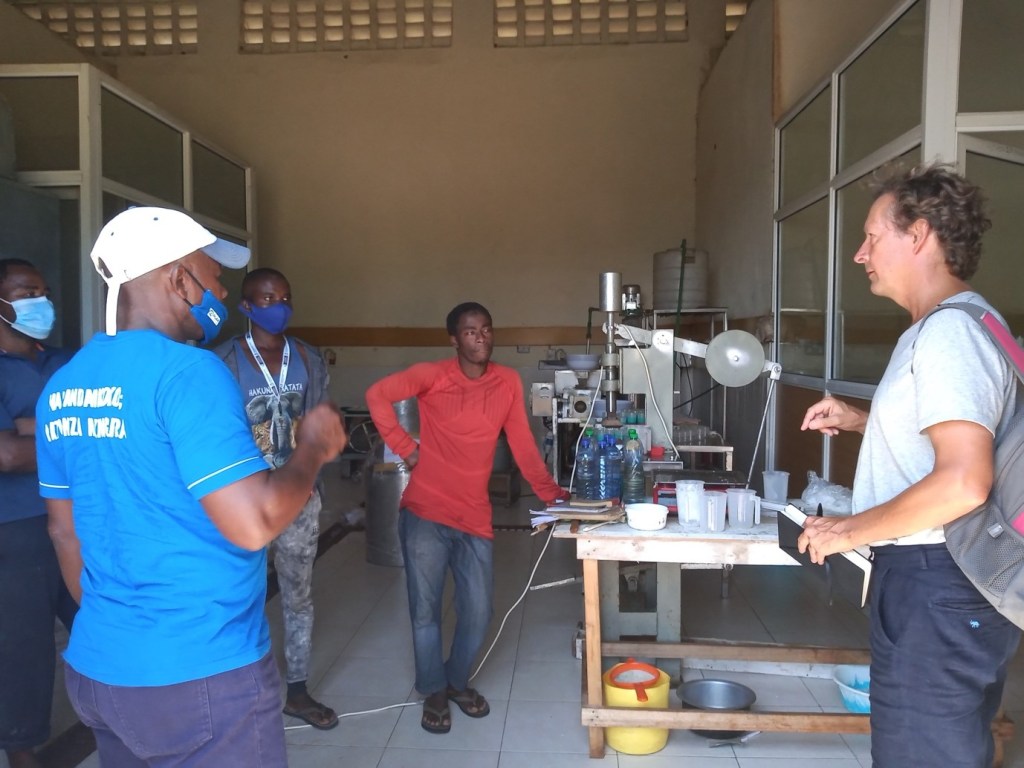
Alex Midlen asks a question of Seaweed Farm Cooperative members
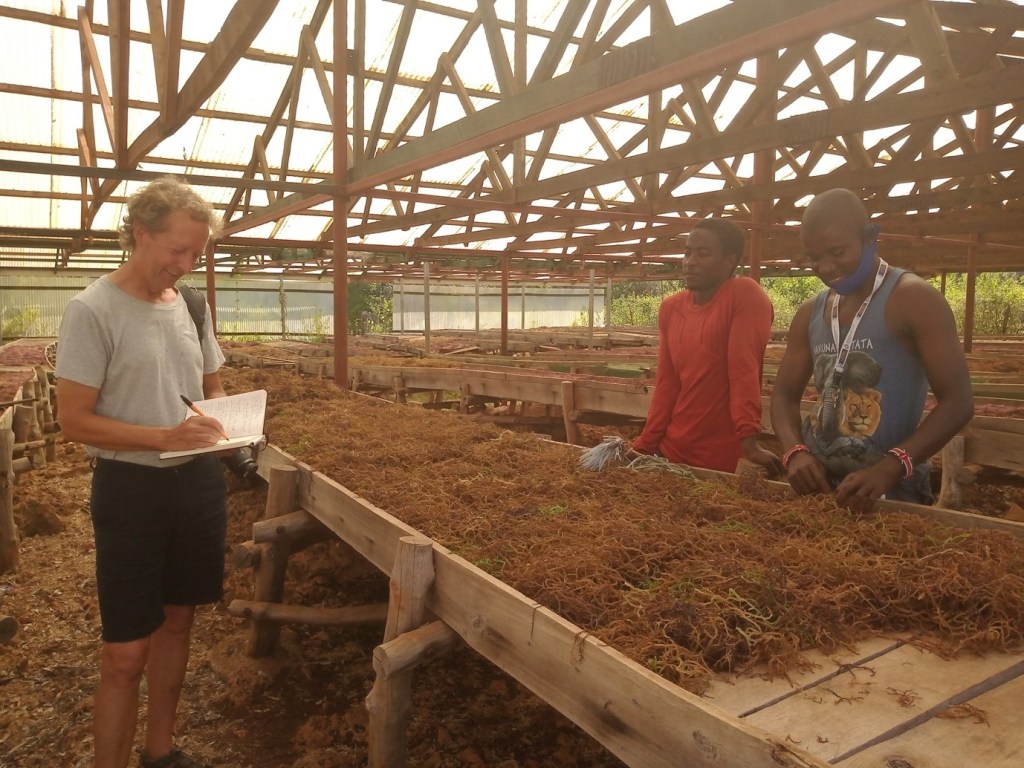
Seaweed farmers explain how the seaweed is harvested and dried.
.
Daisy Lynch
Daisy was a second year student reading Classical Archaeology and Ancient History at Exeter College when she was awarded the bursary in 2020. Unfortunately Covid made it impossible for her to travel in 2002/21 but she undertook a revised project in 2022. She lives in Lelant in Cornwall.
Naples 2022 – An excursion to benefit the further study of Classics.
Oxford University Cornwall Society
I was lucky enough in February 2020, during the second year of my degree, to have been
awarded a travel grant from the Oxford University Cornish Society to travel with the express aims to further my understanding of my subject (Classical Archaeology and Ancient History). I had planned to travel to Naples, Italy, in order to visit the ever popular sites of Pompeii and Herculaneum in order to gain inspiration for my upcoming thesis. However, if you had made note of the date in my first sentence, you may realise just how quickly those plans were thwarted by the Covid-19 pandemic. Almost two years later than I had originally planned to go, I finally found myself this summer in the crowded streets of Pompeii under the ominous and looming shadow of
Mount Vesuvius, map in hand, searching for (of all places) the city’s brothel.
The trip was long enough that I was able to spend a day at each site, soaking up as much of the setting as possible, and still having a day to be spent at the National Archaeological Museum (conveniently next to a Neapolitan gluten free bakery – coeliac heaven!). The museum was extensive, and refreshingly in the shade, displaying all the precious items which had to be removed from their find-site – rare bronzes (most statues and many household items from the ancient world were cast in bronze, but so few survive due to the recycling of the material in later periods), plaster wall paintings in fabulous colour, and the famous Farnese collection of marbles.
We often think of the classical world in brilliant marble – nothing but shades of pure white, but the misfortune of time has stripped the ancient world of its colour. The wall paintings in the National Archaeological Museum remind us of the spectrum of colours which would have adorned walls, statues, and floors. Following this, I spent my 22nd birthday in the streets of Herculaneum, which was remarkably shady due to the surviving second floors on many of the buildings – this is an especially impactful view after having spent time studying on other sites which remain essentially nothing more than their stone foundations. It can be hard to visualise the classical world in 3D
when this is the only exposure you have of the space it took up. Here, walking amongst the city walls as you would in your own high street really gave a truer impression of how the site would have been in its glory days. My final, and perhaps favourite, day was spent in Pompeii, which dwarfs Herculaneum by comparison since it is fortunately not built over with Naples’ sprawling suburbs. It holds every essential to a Roman way of life – an amphitheatre (once closed for ten years because its citizens started a violent brawl in 59 A.D.), a forum, various open shop fronts, bars, temples, and infamously the lupanar grande (brothel) – cleverly guided by pointing phalluses on the road. The ability to enter the surviving houses to engage directly with the space, as opposed to the passive viewership of museum display cases, really brought to light the culture,
values, and environments of the Romans in a way I have never experienced before, even as an archaeology student. An excursion to Pompeii brings us closer, as cliche as it is, to the lives of people separated from us by thousands of years and yet united by shared human experiences.
This is perhaps most poignantly seen in the remains of a lone, carbonised loaf of bread still sitting in the baker’s oven, having waited two-thousand years to be removed (perhaps this is a comfort to any of the terrible baker’s out there – you could always have left it in the oven for longer).
If it were not for the generous donation of this grant by the society, as well as the additional kindness of holding the money for two years while the world slowly recovered, such a trip would never have been possible. Those of us who live in Cornwall are painfully aware that the price we pay for living in such a unique place is to be so far away from the rest of the world. This makes every trip that bit more expensive, it takes that bit longer to arrive, and that bit harder to get to. Hence, this grant made possible for me what was otherwise too financially daunting to achieve.
While I may have just finished my finals by the time I was able to actually fulfil my trip, it has been the perfect end to four years of studying classics, and the start of what I hope is many more.
Thank you OUCS!

Issy Paul
Issy was a third year student reading Theology and Religion at Worcester College.
She will be taking a play to the Edinburgh Fringe Festival before beginning an MA in Theatre Directing at Mountview Academy of the Arts. She is from Launceston, Cornwall.
July 2021 update
I have spent the past year training on the MA Theatre Directing course at Mountview Academy of Theatre Arts which has been an incredible experience. I have had the opportunity to be taught by leading practitioners and develop my practice as a director. I have just completed my final show, a production of Glyn Maxwell’s ‘The Forever Waltz’, which is a reimagining of the Greek myth of Orpheus and Eurydice, and I am currently completing my dissertation which explores contemporary adaptations of Christopher Marlowe’s Doctor Faustus. Having studied Theology at Oxford, I am particularly interested in the intersection between Religion and Theatre, and this is an area I hope to explore further upon leaving Mountview. I am hoping to work as an assistant director as well as developing my production of the Forever Waltz and hopefully staging it at a London venue in the near future.


Thank you so much for this!!
The Medical Elective Bursary was awarded to James Brebner
James Brebner was a final year Medical Student at Green Templeton College. He was to undertake a medical elective on A&E and anaesthetics at Mater Dei Hospital in Malta. Instead, he will be work in the NHS to help deal with the Coronavirus epidemic. He will be reporting back on his experiences as a junior doctor (see below).

Background . James was born in Treliske Hospital and grew up in Nanstallon, between Wadebridge and Bodmin. After taking A levels at Wadebridge School and Truro College, he was awarded a place at LMH to study medicine. He gained a BA in Medical Sciences in 2017 and then moved to Green Templeton College to study for a BMBCh Medicine (Bachelor of Medicine and Bachelor of Surgery) degree. That degree requires a ten-week elective to be undertaken which he planned to carry out in the early months of this year. Five weeks would be spent at the New Cross Hospital in Wolverhampton, followed by a further five weeks at the Mater Dei Hospital in Malta. At both hospitals, he would split his time between A&E and anaesthetics, the latter being the career path he is considering. Not being from a wealthy family, he sought various sources of funding and decided to apply to the OUS Cornwall Bursary Fund for support.
5 January We received James’ application for a Medical Elective Bursary of £500.
14 January The Committee unanimously agreed to make the award, provided all other grants were confirmed and the elective was set to proceed. The New Cross place had already been confirmed on 27 December and the Mater Dei confirmation followed on 12 February. We consequently made the payment.
14 March James decided to cancel the Malta elective, which was due to start on 3 May, when he heard that quarantine was being enforced for all arrivals due to Covid-19, meaning carrying out the elective would be impossible. He then found out that the Wolverhampton elective, which was due to start on 29 March, had been put on hold. Having previously arranged accommodation in Wolverhampton, he moved there from Oxford and waited for news about where he would be posted for an interim foundation year job that would be created for him. He would work in a hospital as a foundation doctor for a few months before starting his official foundation year job in August, when he would qualify as an F1 doctor.
20 March James informed the Committee about the change of plan, since our Medical Elective is normally to help with the expense of spending time abroad. Rather than ask him to return our £500, we quickly agreed that he would be welcome to use it to help reduce the stress associated with suddenly having extra costs imposed on him for an uncertain period. In return, he agreed to send us regular reports of his experiences in the coming months.
7 April Having expected to graduate in the summer following completion of the necessary elective, James and his colleagues heard that they would be graduating early and he duly graduated, without any of the pomp and ceremony of the Sheldonian, on 7 April.
20 April Having spent several frustrating weeks kicking his heels in Wolverhampton, while hearing about the exhaustion of NHS doctors and nurses due to Covid-19, he finally heard that he had been given an interim post in Stoke Mandeville Hospital in Aylesbury, Buckinghamshire starting for induction on 4 May and for work on 11 May. He has not yet heard in which department he will be based, though he believes that new doctors will be based in non-Covid departments as much as possible.
4 May First day of induction at Stoke Mandeville. Focus on health and safety in the morning, with several talks about working hours and how life will be made safe and friendly. The new junior doctors will be as far removed as possible from Covid patients. The afternoon focussed on life support in emergencies – the practice of CPR and the use of defibrillators. Very relieved to be finally starting to make a contribution after six weeks of nothingness.
5 May Settled in to the new accommodation and enjoying three meals a day provided by the NHS and being paid as a junior doctor. More training today, including end of life care and how to discharge patients. Looking forward to getting stuck in on the wards next week.
7 May On the wards today, an experience we don’t get at university. A free weekend ahead, normally something I would be excited about, but lockdown continues so what can I do? Sharing the accommodation with most of the other new doctors helps in the evenings.
16th May A quick update on my first two days of working. It’s all been surprisingly relaxed, the people I work with are really helpful and friendly, and I’m enjoying what I do. It’s a strange transition to actually working as a junior doctor, as what they prepare you for during medical school isn’t really what the majority of my work involves – preparing patient notes for the ward round, and ordering blood tests & scans. It also feels a little scary writing prescriptions and putting my signature on the charts, as it feels like a lot of responsibility even though I know that I know what I’m doing.
There are definitely times when I feel I don’t know what I’m doing and have to ask for help, but luckily everyone’s super helpful and understanding when that happens, and it’s always better to ask. I think I just have to accept that I’ll feel that way for at least the first few weeks, but will gradually become more sure of myself and will get better and putting everything I’ve learned over the last six years into practice, and I’ll learn a lot along the way. It’s also quite difficult getting to grips with all the different pieces of software we have to use, as the computers here use a lot of different programmes to achieve various tasks, so working out what to do with each one is quite a task, especially when I’m used to a very different system in Oxford.
w/c 17 May The first full week went well, with the pace gradually picking up. From being responsible for 1-2 patients each day, by the end of the week I had a full bay of 4-5. The ward I am on deals with patients recovering from emergencies, so no drop off in admissions due to Covid. This was a steep learning curve, but great experience for the future. The contract at Stoke Mandeville runs to 17 July, when I move to full time employment in Leeds.
25 May Since James is now well into his transition from new graduate to junior doctor and will no doubt be getting much busier, we have decided not to intrude on his time any further. Our bursary helped him financially during the weeks he spent waiting for his placement in Stoke Mandeville, instead of being fully funded during his planned elective in Wolverhampton and Malta.
.
.


Chairman’s Observations
It is once again my pleasure to comment on our latest Report on the bursaries that thanks to the generosity of members we have been able to award during 2019. On behalf of the Committee and all the members I wish to congratulate Fenella Wojnarowska on producing such an interesting and readable Report and to thank her for the considerable amount of time and expertise she has expended in handling this programme. It remains the cornerstone of the Branch’s effort to give something back by enabling as many students from Cornwall as possible to apply to Oxford and by helping those who are there to make the most of their Oxford experience.
It never ceases to amaze me just how versatile, learned in their specific fields and ready to further their studies are our bursary applicants. The account of their different projects in this Report fully bears this out. Clearly life at Oxford these days is rather more intense than it was in mine, back in the fifties!
As our Secretary/Treasurer, Richard Cockram, who also deserves our thanks, points out below, the number of future awards depends on us being able to sustain the present level of giving for Bursaries. I also hope that our cooperation with Exeter college will lead to further initiatives to persuade pupils at state schools and sixth form colleges in the county to take the plunge and apply for Oxford. The recent practice by universities of offering many more unconditional places does not help and should be officially discouraged. Enjoy this Report and I hope to see many of you at future events, perhaps at the Rick Stein lunch on 29 February. I promise that our Speaker will be both amusing and challenging.
Jeremy Varcoe CMG Chairman
_______________________________
This year we funded nine bursaries at a total cost of £3,850. In a typical year we raise around £1,000 at our annual fundraising lunch in Antony, thanks to the generosity of Andrew Willoughby, and the membership fee raises a further £500. Individual donations vary from year to year and can reach as much as £1,000. We have been able to spend above our income thanks to a positive balance that accumulated over the years prior to establishment of the Bursary Fund, but we will soon need to tighten our belts to bring income and expenditure closer together. Any ideas for a fund raising event would be gratefully received, as would any donations.
Richard Cockram Treasurer
Please contact us if you would like to be involved. There are several ways to do this:
- Organising fundraising events with OUCS
- Donating
- Providing help to students at your local school
- Mentoring in Science, Languages and Humanities
- Interview practice
- Career discussion and advice
- Offering work experience
- Sharing your experience of mentoring with us
Fenella’s experience of mentoring
A quote from one of the girls I mentored
‘Just to let you know that I confirmed my place at Oxford and achieved all A*s! I still can’t quite believe it. I’m so happy and so grateful for all your help in getting me there, I couldn’t have gotten through the interviews without it. I hope to see you again at some point, maybe at Café Sci again.’
- Pa

Having gained so much ourselves from subsidised University of Oxford educations, we strongly feel we should help students from Cornwall, who now have to be self-funding. The bursary scheme we run offers bursaries from £250 – £500 for students for projects to be performed before September 2023. Normally only one award will be given to each student during their student career. These are available to all Cornish undergraduate and postgraduate students.
Bursary to promote the understanding of Cornwall and Cornish Culture and Heritage
Cornwall has a rich culture, heritage and environment, both past and present. This bursary is to promote the academic understanding of Cornish culture in its widest sense and to foster future academic interest and awareness of Cornwall. It is hoped in the long term that inspiring future academics and graduates with an interest in Cornwall will result in them contributing to Cornwall.
This bursary (value £500) is to finance an Oxford student to undertake a project in Cornwall that will contribute to their fieldwork or dissertation. Subjects might include archaeology, anthropology, history, language, literature, music, art, geology, science, the environment and economics but this list is not exclusive and we are open to other topics. This bursary is open to all undergraduate and post graduate students.
Closing date 15th May 2023
Bursaries to fund a broader understanding of the student’s subject
Bursaries (value £250 – £500) to fund students with strong connections to Cornwall (in most cases 5 years residence in Cornwall) to travel or visit somewhere that will contribute to a broader understanding or different viewpoint of their subject. Normally only one award will be given to each student during their student career.
Closing date 15th May 2023
The Endellion Sharpe Bursary to fund an activity beneficial to themselves and others
Bursaries (£250 – £500) to fund students with strong connections to Cornwall (in most cases 5 years residence in Cornwall) to travel to perform a project, which will be a life-enhancing activity that will benefit both the individual and the local community and broaden the mind of the applicant.
Normally only one award will be given to each student during their student career.
Closing date 15th May 2023
Bursaries to fund an Internship
A maximum of two bursaries (£250) to contribute towards internships for undergraduate students with strong connections to Cornwall (in most cases 5 years residence in Cornwall). Normally only one award will be given to each student during their student career.
Closing date 15th May 2023
Bursary to fund a medical elective abroad
Bursary (value £250 – £500) to fund a medical student with strong connections to Cornwall (in most cases 5 years residence in Cornwall) to work in a hospital or visit somewhere that will contribute to a broader understanding or viewpoint of clinical medicine. Normally only awarded in the final year of clinical training.
Closing date 1st January 2023
Format for Applications for Bursaries
The committee considering applications will give awards according to how closely they meet the conditions of the bursaries. Applicants should aim to present their case clearly and grammatically, paying attention to syntax and spelling. Please read through your application carefully before submission. That is a good habit to form, which will be valued in your professional careers.
Please send :- CV with personal statement and Cornwall connections – 1 page and an Outline of Internship or Bursary project – 1 page
to:- Professor Fenella Wojnarowska
01566 781319
fenella@northtregeare.com
Report on successful bursary applications to OUCS Cornwall Branch, 2023
The Medical Elective Bursary was awarded to Morwenna Tamblyn
Morwenna Tamblyn is a final year medical student at Merton College. She is from St Austell in Cornwall and intends to work in Cornwall when she has completed her training. She will be undertaking a project studying oncology at the Sir Anthony Mamo Oncology Centre in Malta to develop expertise in that field, followed by a month at a GP practice in Oxfordshire.

..
.
.
Report on successful bursary applications to OUCS Cornwall Branch, 2022
.
Bursaries to fund a broader understanding of the student’s subject were awarded to 7 students in 2022
One bursary was awarded to Frederick Wright-Morris to help fund a project in Namibia
My project work in Namibia focused on mapping 67km2 of semi-arid scrubland around Uis. This area contained many pegmatites, a form of coarse-grained igneous intrusion. The aim was to find a link between Ta-Sn mineralisation in these pegmatites and their mineral contents and spatial characteristics. I spent 8 weeks total in Namibia with 1 week preparing for my work, 6 weeks mapping and 1 week travelling around Namibia. My hope is that this work will be a great basis for my Integrated Master project, although I will not be finishing it until May and have not yet started on my analysis. Our travelling around Namibia involved visits to the Etosha National Park, Epupa falls and the Skelton coast National park. This trip was a welcome break from my work and contained some of the best experiences of my summer whilst providing wider context for my project. Without the Bursary from the Cornwall Alumni Society none of this work would have been possible and I would not have had the opportunity to see or work in the beautiful country of Namibia.
Another bursary was awarded to Lucy Trafford to attend a conference.
I am very grateful to the Cornwall Bursary Fund for supporting my trip to the 22nd European Criminology Society Conference. The four-day conference was an incredible opportunity to meet academics whose work I had followed over several years and provided me with the opportunity to discuss their theories, findings and research methods. I was able to present my own research about police responses to domestic violence during the covid-19 pandemic and changes in victimisation rates, as part of a panel which I organised with expert academics. Presenting my own research to a room full of interested academics, who research similar areas and topics, helped improve my public speaking and confidence in my own research. Questions from senior academics enabled me to gain some fantastic feedback and I was delighted that they were very interested in my findings. I have since been offered work with key academics on future research projects.
Another bursary was awarded to Yasmine Biddick to attend an overseas conference.
She is interested in the (potential) use of natural products in the treatment of Leishmaniasis. New treatments are important because of the limitations of those currently on the market: side-effects, drug-resistance, and not suitable for those who are pregnant or with a co-infection such as HIV.
Compounds produced by, for example, plants are often a form of defense against disease. The future use of some natural products in medicine has been made possible through the design of some elegant syntheses already published. Through the synthesis of the parent natural products and derivatives, biological testing can be conducted to determine structure-activity relationships, and we can develop an understanding of why these natural compounds have antiparasitic activity; this is my project. This could also influence the design of synthetic compounds with even better antiparasitic activity in the future.
Another bursary was awarded to Anna Gilchrist to travel to Greenland
She intends to use the bursary to travel to the Greenland Ice Sheet in order to join a scientific research expedition. We will be collecting and measuring samples of glacial run off water in order to establish the factors that are controlling the algal blooms at the ice surface. These algal blooms are pigmented and so are darkening the ice sheet which accelerates its melting.
There has been an increase in both surficial melt and biomass on the Greenland Ice Sheet over the past two decades, in response to the changing climate, which is particularly evident in western and southern Greenland. This surface meltwater is routed to the ice sheet bed via moulins, at increasing distance from the ice margin, up to ~ 80km in certain cases, resulting in an increased biomass flux to the subglacial environment. However, no current research is focused on how this may potentially stimulate subglacial microbial communities. During this pilot study we will investigate the reactivity of organic matter in subglacial and proglacial sediments and then assess how the addition of material from the ice surface to these sediments could impact nutrient cycling and mineral weathering.
Another bursary was awarded to Ella Kyle for geology project.
Ella will be undertaking a 6 week independent mapping project in the Lake District around Coniston. This is a compulsory part of my course which contributes to my final grade. I will stay and travel with 5 other students, but we will be mapping adjacent areas in pairs and then writing up our final projects individually (with discussion and collaboration between the
6 of us encouraged).
The aim of the project is to demonstrate the ability to plan and prepare for field trips including finding a suitable location, producing risk assessments and managing accommodation, transport, catering and equipment. It also tests our geological observation, recording and interpretation skills; during the course of the project we will keep a log book and produce a detailed geological map of the area. We will record information such as rock type, the relationship between different rock types and significant features (e.g. faulting or folding).
.
Bursary to fund an internship was awarded to Sophie Tucker
I am currently in the third year of my undergraduate degree in physics at St Anne’s college Oxford. Over the course of ten weeks this summer, from the 11th July to the 18th of September, I will be undertaking an internship in condensed matter physics, supervised by Robert Oliver. The group in which I will be working is the Oxford photovoltaic and optoelectronic device group, focussed on developing and understanding new devices for solar energy conversion.
During my internship, I will be studying the effect of the encapsulation growth method on the structure of perovskite photovoltaics. This is a particular method used in the fabrication of solar cells, which has been shown to have an effect on the structure, and therefore performance, of such cells. This internship will help to develop my lab skills in a professional environment, as well as give me experience in a research based role in condensed matter physics, an area that I am interested in pursuing.
Bursary to promote the understanding of Cornwall and Cornish Culture and Heritage
.
One bursary was awarded to Celeste Van Gent
My dissertation was concerned with environmental history and animal studies, and looked specifically at the experience of travel in late medieval England. I had a rich documentary source at hand: a travel diary by William Worcester who recorded his journey on horseback from Norwich to St. Michael’s Mount in 1478. I was particularly interested in his journey across Cornwall— especially Bodmin Moor for it was the only time he recorded falling off his horse. This bursary enabled me to take a trek on horseback across Bodmin Moor, giving me insight into his journey that can only be gained through experience. I rode a placid Irish cob on a two-hour trek across the south-eastern part of the Moor. It began with a steep climb that settled into an undulating trek that wound its way through standing stones, barrows, and prehistoric tors. I noticed how much our route was determined by thick heather that we had no choice but to ride around, and how frequently our horses stumbled on the rocky terrain. We encountered wild horses whose aggressiveness forced us to change our route—something which I will research further in the context of medieval horse management. Encountering rain, wind, and sun I understood how exposed the Moor is, as well as how vast it is—Worcester’s choice to ride all the way from Norwich was quite the physical undertaking. Indeed, the challenging terrain and how little we travelled over two hours reinforced the uniqueness of Worcester’s journey and his choice to ride across the Moor rather than take the more common route that ran around it.
Thank you again for your generosity, it was both an enjoyable and enlightening experience, and I am eager to see how it informs further research.
The Medical Elective Bursary was awarded to William Brebner
Will Brebner is a final year st.udent studying medicine at Christ Church. He undertook an elective at Kurunegala Teaching Hospital in Sri Lanka. He is from Wadebridge in Cornwall.
.
I was grateful to receive a bursary from OUS Cornwall to help fund my medical elective. Based in the Emergency Department in Sri Lanka, the high patient turnover made for a great educational experience given the range of cases. Road traffic accidents were frequent, and whilst at times making me feel uncomfortable, proved useful for my practical skills as I worked as part of the resuscitation team. Given the country’s ongoing socioeconomic difficulties, there were clear shortages of medicines and equipment; it was frustrating to see but inspiring to observe the staff dealing with the challenge.
In addition, I was fortunate to have a placement at Viet Duc hospital, Vietnam. In anaesthetics, many doctors talked about travelling to countries such as the UK or France for conferences and skills workshops, with the doctors they met subsequently coming to Vietnam to exchange ideas and skills. This opened my eyes to the importance of an international outlook. I also enjoyed scrubbing into theatre for a range of surgical procedures, and attended clinics and ward rounds in the neurology department where I was fascinated to see a number of clinical signs which I had only seen before in textbooks. Overall, the experience was hugely valuable to my personal and career development, and I would like to thank OUS Cornwall for their support.
Report on successful bursary applications to OUCS Cornwall Branch, 2021
Bursaries that have been awarded this year
Helen Carasso has been awarded a bursary to promote the understanding of Cornwall and Cornish Culture and Heritage
Helen is in the final year of her MSt in History of Design at the Department of Continuing Education. She is a student at Kellogg College. With the support of her bursary, Helen will be studying Modernist architecture of the 1930s at the English seaside, with the Jubilee Pool in Penzance as a case study. She will be considering the extent to which this style, that is associated with many widely-admired spaces of luxury and pleasure including cruise liners, lidos and cinemas, was also effective and popular when used for residential developments, such as the Frinton Park Estate in Essex.
November 2021 update
Thanks to the financial support of OUS(Cornwall), I visited the county in May, to explore Modernist architecture on the English coast for my MSt History of Design dissertation. As well as getting the user’s perspective on Penzance’s Jubilee Pool, records in the Morrab Library and county archive in Redruth helped me to understand the thinking and debates around its construction. It became clear that Borough Engineer, Frank Latham, who championed and designed the Pool, understood that it must be a resource for the community, as well as an attraction for tourists (and the money they would spend nearby). From its opening on 31 May 1935, it was a popular and financial success.
Before and during my research trip, people in Cornwall were pleased to be able to help me to find out more about their local lido, whether sharing personal experiences, opening their archives, hosting my visit or, in the case of OUS(Cornwall) awarding me a bursary. Today, the Jubilee Pool is a highly popular community-owned space and remains at the heart of this generous and welcoming community, as Latham intended.
.
,
Louis Emanuel has been awarded a bursary to fund an internship.
Louis Emanuel is studying Engineering Science at Mansfield College. He will be undertaking an internship at Invesco asset managers. He has lived in Newquay since 2003.
.
Update December 2021
With the generous support of the Oxford University Society of Cornwall, I was able to make the most of my internship at Invesco. The experience was hugely rewarding and as an engineering student, offered a very steep learning curve. Throughout the summer I was fortunate enough to shadow portfolio managers, attend investment discussions and develop my understanding of the asset management industry. One personal highlight was attending an investment meeting with the McLaren board where I was given the opportunity to ask questions to the CEO. I would like to thank the Oxford University Society of Cornwall for its support and continued guidance. With their help I was able to enjoy my time at Invesco to the fullest. I would encourage other Cornish students to reach out to OUCS and take advantage of the excellent support they offer.
Report on successful bursary applications to OUCS Cornwall Branch, 2020
Three bursaries were awarded to broaden the understanding of the student’s subject. We have given them a deadline of September 2021 to complete their projects.
Alex Midlen
Alex is a reading for a DPhil in Geography and Environment at Green Templeton College. He will be undertaking a project studying the governance of marine resources in Kenya. He is from Callington in Cornwall.
Blue Economy PhD update
This last year has been a very frustrating one – a fact which needs no further explanation! However, it’s given me time to develop my case study research plans and refine general aspirations into more concrete proposals whilst glued to my computer in east Cornwall.
My research site in Kenya is the Lamu archipelago in the north. It’s a rich ecosystem comprising islands, tidal estuaries and creeks, mangrove, coral reefs, and seagrass beds – all of which provide a rich habitat for commercially important fisheries, and sources of timber for fuel and construction, and attract wildlife tourism. Lamu town itself, on Lamu Island (pictured), is a UNESCO World Heritage Site, being the oldest Arab trading port on the East coast of Africa. My research concerns the potential impact of plans for a new city, airport, port, railway and power station to be developed on the adjacent mainland, on the lives and livelihoods of the inhabitants of the archipelago. For them, surviving on artisanal fisheries, and cultural and wildlife tourism, the environmental impacts of these long term, nationally important plans are profound and threaten their very identity. The prevailing fear is that consequent environmental degradation will destroy traditional livelihoods and ways of life. The construction of the port and dredging of a deep water access channel are already causing visible impacts.
I have now undertaken field research on the so-called ‘Blue Economy’ – developing the oceans to lift people out of poverty, but doing so sustainably. Pictured here on a recent visit to a seaweed farming cooperative in the south, I gathered information on social enterprise practices as a form of environmental governance within the blue economy context.
“Social enterprise is something that I have been very impressed with here. The concept of co-management is enshrined in Kenya’s constitution and the natural resource acts that flow from it. People here really do make great efforts to use these legal rights to benefit communities whilst conserving resources at the same time.”
Seaweed is farmed on the foreshore, attached to horizontally fixed ropes. Seed pieces grow to 10x their initial weight in 45 days. Its harvested, sun-dried, baled then sold to makers of carrageenan, a versatile ingredient in food and cosmetic products. The cooperative also has its own small processing facility and makes various soap products for local markets.
A member of Kibuyuni Seaweed Farmers cooperative commented proudly, “This project has helped people in this community. They live in permanent houses and are sending their children to school and university.”
Alex Midlen asks a question of Seaweed Farm Cooperative members
Seaweed farmers explain how the seaweed is harvested and dried.
.
Daisy Lynch
Daisy was a second year student reading Classical Archaeology and Ancient History at Exeter College when she was awarded the bursary in 2020. Unfortunately Covid made it impossible for her to travel in 2002/21 but she undertook a revised project in 2022. She lives in Lelant in Cornwall.
Naples 2022 – An excursion to benefit the further study of Classics.
Oxford University Cornwall Society
I was lucky enough in February 2020, during the second year of my degree, to have been
awarded a travel grant from the Oxford University Cornish Society to travel with the express aims to further my understanding of my subject (Classical Archaeology and Ancient History). I had planned to travel to Naples, Italy, in order to visit the ever popular sites of Pompeii and Herculaneum in order to gain inspiration for my upcoming thesis. However, if you had made note of the date in my first sentence, you may realise just how quickly those plans were thwarted by the Covid-19 pandemic. Almost two years later than I had originally planned to go, I finally found myself this summer in the crowded streets of Pompeii under the ominous and looming shadow of
Mount Vesuvius, map in hand, searching for (of all places) the city’s brothel.
The trip was long enough that I was able to spend a day at each site, soaking up as much of the setting as possible, and still having a day to be spent at the National Archaeological Museum (conveniently next to a Neapolitan gluten free bakery – coeliac heaven!). The museum was extensive, and refreshingly in the shade, displaying all the precious items which had to be removed from their find-site – rare bronzes (most statues and many household items from the ancient world were cast in bronze, but so few survive due to the recycling of the material in later periods), plaster wall paintings in fabulous colour, and the famous Farnese collection of marbles.
We often think of the classical world in brilliant marble – nothing but shades of pure white, but the misfortune of time has stripped the ancient world of its colour. The wall paintings in the National Archaeological Museum remind us of the spectrum of colours which would have adorned walls, statues, and floors. Following this, I spent my 22nd birthday in the streets of Herculaneum, which was remarkably shady due to the surviving second floors on many of the buildings – this is an especially impactful view after having spent time studying on other sites which remain essentially nothing more than their stone foundations. It can be hard to visualise the classical world in 3D
when this is the only exposure you have of the space it took up. Here, walking amongst the city walls as you would in your own high street really gave a truer impression of how the site would have been in its glory days. My final, and perhaps favourite, day was spent in Pompeii, which dwarfs Herculaneum by comparison since it is fortunately not built over with Naples’ sprawling suburbs. It holds every essential to a Roman way of life – an amphitheatre (once closed for ten years because its citizens started a violent brawl in 59 A.D.), a forum, various open shop fronts, bars, temples, and infamously the lupanar grande (brothel) – cleverly guided by pointing phalluses on the road. The ability to enter the surviving houses to engage directly with the space, as opposed to the passive viewership of museum display cases, really brought to light the culture,
values, and environments of the Romans in a way I have never experienced before, even as an archaeology student. An excursion to Pompeii brings us closer, as cliche as it is, to the lives of people separated from us by thousands of years and yet united by shared human experiences.
This is perhaps most poignantly seen in the remains of a lone, carbonised loaf of bread still sitting in the baker’s oven, having waited two-thousand years to be removed (perhaps this is a comfort to any of the terrible baker’s out there – you could always have left it in the oven for longer).
If it were not for the generous donation of this grant by the society, as well as the additional kindness of holding the money for two years while the world slowly recovered, such a trip would never have been possible. Those of us who live in Cornwall are painfully aware that the price we pay for living in such a unique place is to be so far away from the rest of the world. This makes every trip that bit more expensive, it takes that bit longer to arrive, and that bit harder to get to. Hence, this grant made possible for me what was otherwise too financially daunting to achieve.
While I may have just finished my finals by the time I was able to actually fulfil my trip, it has been the perfect end to four years of studying classics, and the start of what I hope is many more.
Thank you OUCS!
Issy Paul
Issy was a third year student reading Theology and Religion at Worcester College.
She will be taking a play to the Edinburgh Fringe Festival before beginning an MA in Theatre Directing at Mountview Academy of the Arts. She is from Launceston, Cornwall.
July 2021 update
I have spent the past year training on the MA Theatre Directing course at Mountview Academy of Theatre Arts which has been an incredible experience. I have had the opportunity to be taught by leading practitioners and develop my practice as a director. I have just completed my final show, a production of Glyn Maxwell’s ‘The Forever Waltz’, which is a reimagining of the Greek myth of Orpheus and Eurydice, and I am currently completing my dissertation which explores contemporary adaptations of Christopher Marlowe’s Doctor Faustus. Having studied Theology at Oxford, I am particularly interested in the intersection between Religion and Theatre, and this is an area I hope to explore further upon leaving Mountview. I am hoping to work as an assistant director as well as developing my production of the Forever Waltz and hopefully staging it at a London venue in the near future.
Thank you so much for this!!
The Medical Elective Bursary was awarded to James Brebner
James Brebner was a final year Medical Student at Green Templeton College. He was to undertake a medical elective on A&E and anaesthetics at Mater Dei Hospital in Malta. Instead, he will be work in the NHS to help deal with the Coronavirus epidemic. He will be reporting back on his experiences as a junior doctor (see below).
Background . James was born in Treliske Hospital and grew up in Nanstallon, between Wadebridge and Bodmin. After taking A levels at Wadebridge School and Truro College, he was awarded a place at LMH to study medicine. He gained a BA in Medical Sciences in 2017 and then moved to Green Templeton College to study for a BMBCh Medicine (Bachelor of Medicine and Bachelor of Surgery) degree. That degree requires a ten-week elective to be undertaken which he planned to carry out in the early months of this year. Five weeks would be spent at the New Cross Hospital in Wolverhampton, followed by a further five weeks at the Mater Dei Hospital in Malta. At both hospitals, he would split his time between A&E and anaesthetics, the latter being the career path he is considering. Not being from a wealthy family, he sought various sources of funding and decided to apply to the OUS Cornwall Bursary Fund for support.
5 January We received James’ application for a Medical Elective Bursary of £500.
14 January The Committee unanimously agreed to make the award, provided all other grants were confirmed and the elective was set to proceed. The New Cross place had already been confirmed on 27 December and the Mater Dei confirmation followed on 12 February. We consequently made the payment.
14 March James decided to cancel the Malta elective, which was due to start on 3 May, when he heard that quarantine was being enforced for all arrivals due to Covid-19, meaning carrying out the elective would be impossible. He then found out that the Wolverhampton elective, which was due to start on 29 March, had been put on hold. Having previously arranged accommodation in Wolverhampton, he moved there from Oxford and waited for news about where he would be posted for an interim foundation year job that would be created for him. He would work in a hospital as a foundation doctor for a few months before starting his official foundation year job in August, when he would qualify as an F1 doctor.
20 March James informed the Committee about the change of plan, since our Medical Elective is normally to help with the expense of spending time abroad. Rather than ask him to return our £500, we quickly agreed that he would be welcome to use it to help reduce the stress associated with suddenly having extra costs imposed on him for an uncertain period. In return, he agreed to send us regular reports of his experiences in the coming months.
7 April Having expected to graduate in the summer following completion of the necessary elective, James and his colleagues heard that they would be graduating early and he duly graduated, without any of the pomp and ceremony of the Sheldonian, on 7 April.
20 April Having spent several frustrating weeks kicking his heels in Wolverhampton, while hearing about the exhaustion of NHS doctors and nurses due to Covid-19, he finally heard that he had been given an interim post in Stoke Mandeville Hospital in Aylesbury, Buckinghamshire starting for induction on 4 May and for work on 11 May. He has not yet heard in which department he will be based, though he believes that new doctors will be based in non-Covid departments as much as possible.
4 May First day of induction at Stoke Mandeville. Focus on health and safety in the morning, with several talks about working hours and how life will be made safe and friendly. The new junior doctors will be as far removed as possible from Covid patients. The afternoon focussed on life support in emergencies – the practice of CPR and the use of defibrillators. Very relieved to be finally starting to make a contribution after six weeks of nothingness.
5 May Settled in to the new accommodation and enjoying three meals a day provided by the NHS and being paid as a junior doctor. More training today, including end of life care and how to discharge patients. Looking forward to getting stuck in on the wards next week.
7 May On the wards today, an experience we don’t get at university. A free weekend ahead, normally something I would be excited about, but lockdown continues so what can I do? Sharing the accommodation with most of the other new doctors helps in the evenings.
16th May A quick update on my first two days of working. It’s all been surprisingly relaxed, the people I work with are really helpful and friendly, and I’m enjoying what I do. It’s a strange transition to actually working as a junior doctor, as what they prepare you for during medical school isn’t really what the majority of my work involves – preparing patient notes for the ward round, and ordering blood tests & scans. It also feels a little scary writing prescriptions and putting my signature on the charts, as it feels like a lot of responsibility even though I know that I know what I’m doing.
There are definitely times when I feel I don’t know what I’m doing and have to ask for help, but luckily everyone’s super helpful and understanding when that happens, and it’s always better to ask. I think I just have to accept that I’ll feel that way for at least the first few weeks, but will gradually become more sure of myself and will get better and putting everything I’ve learned over the last six years into practice, and I’ll learn a lot along the way. It’s also quite difficult getting to grips with all the different pieces of software we have to use, as the computers here use a lot of different programmes to achieve various tasks, so working out what to do with each one is quite a task, especially when I’m used to a very different system in Oxford.
w/c 17 May The first full week went well, with the pace gradually picking up. From being responsible for 1-2 patients each day, by the end of the week I had a full bay of 4-5. The ward I am on deals with patients recovering from emergencies, so no drop off in admissions due to Covid. This was a steep learning curve, but great experience for the future. The contract at Stoke Mandeville runs to 17 July, when I move to full time employment in Leeds.
25 May Since James is now well into his transition from new graduate to junior doctor and will no doubt be getting much busier, we have decided not to intrude on his time any further. Our bursary helped him financially during the weeks he spent waiting for his placement in Stoke Mandeville, instead of being fully funded during his planned elective in Wolverhampton and Malta.
.
.
Chairman’s Observations
It is once again my pleasure to comment on our latest Report on the bursaries that thanks to the generosity of members we have been able to award during 2019. On behalf of the Committee and all the members I wish to congratulate Fenella Wojnarowska on producing such an interesting and readable Report and to thank her for the considerable amount of time and expertise she has expended in handling this programme. It remains the cornerstone of the Branch’s effort to give something back by enabling as many students from Cornwall as possible to apply to Oxford and by helping those who are there to make the most of their Oxford experience.
It never ceases to amaze me just how versatile, learned in their specific fields and ready to further their studies are our bursary applicants. The account of their different projects in this Report fully bears this out. Clearly life at Oxford these days is rather more intense than it was in mine, back in the fifties!
As our Secretary/Treasurer, Richard Cockram, who also deserves our thanks, points out below, the number of future awards depends on us being able to sustain the present level of giving for Bursaries. I also hope that our cooperation with Exeter college will lead to further initiatives to persuade pupils at state schools and sixth form colleges in the county to take the plunge and apply for Oxford. The recent practice by universities of offering many more unconditional places does not help and should be officially discouraged. Enjoy this Report and I hope to see many of you at future events, perhaps at the Rick Stein lunch on 29 February. I promise that our Speaker will be both amusing and challenging.
Jeremy Varcoe CMG Chairman
_______________________________
This year we funded nine bursaries at a total cost of £3,850. In a typical year we raise around £1,000 at our annual fundraising lunch in Antony, thanks to the generosity of Andrew Willoughby, and the membership fee raises a further £500. Individual donations vary from year to year and can reach as much as £1,000. We have been able to spend above our income thanks to a positive balance that accumulated over the years prior to establishment of the Bursary Fund, but we will soon need to tighten our belts to bring income and expenditure closer together. Any ideas for a fund raising event would be gratefully received, as would any donations.
Richard Cockram Treasurer
Please contact us if you would like to be involved. There are several ways to do this:
- Organising fundraising events with OUCS
- Donating
- Providing help to students at your local school
- Mentoring in Science, Languages and Humanities
- Interview practice
- Career discussion and advice
- Offering work experience
- Sharing your experience of mentoring with us
Fenella’s experience of mentoring
A quote from one of the girls I mentored
‘Just to let you know that I confirmed my place at Oxford and achieved all A*s! I still can’t quite believe it. I’m so happy and so grateful for all your help in getting me there, I couldn’t have gotten through the interviews without it. I hope to see you again at some point, maybe at Café Sci again.’
 Oxford University Society of Cornwall